Welcome To SVB Bearings Private Limited
- info@svbbearings.com
- Call 07949356312

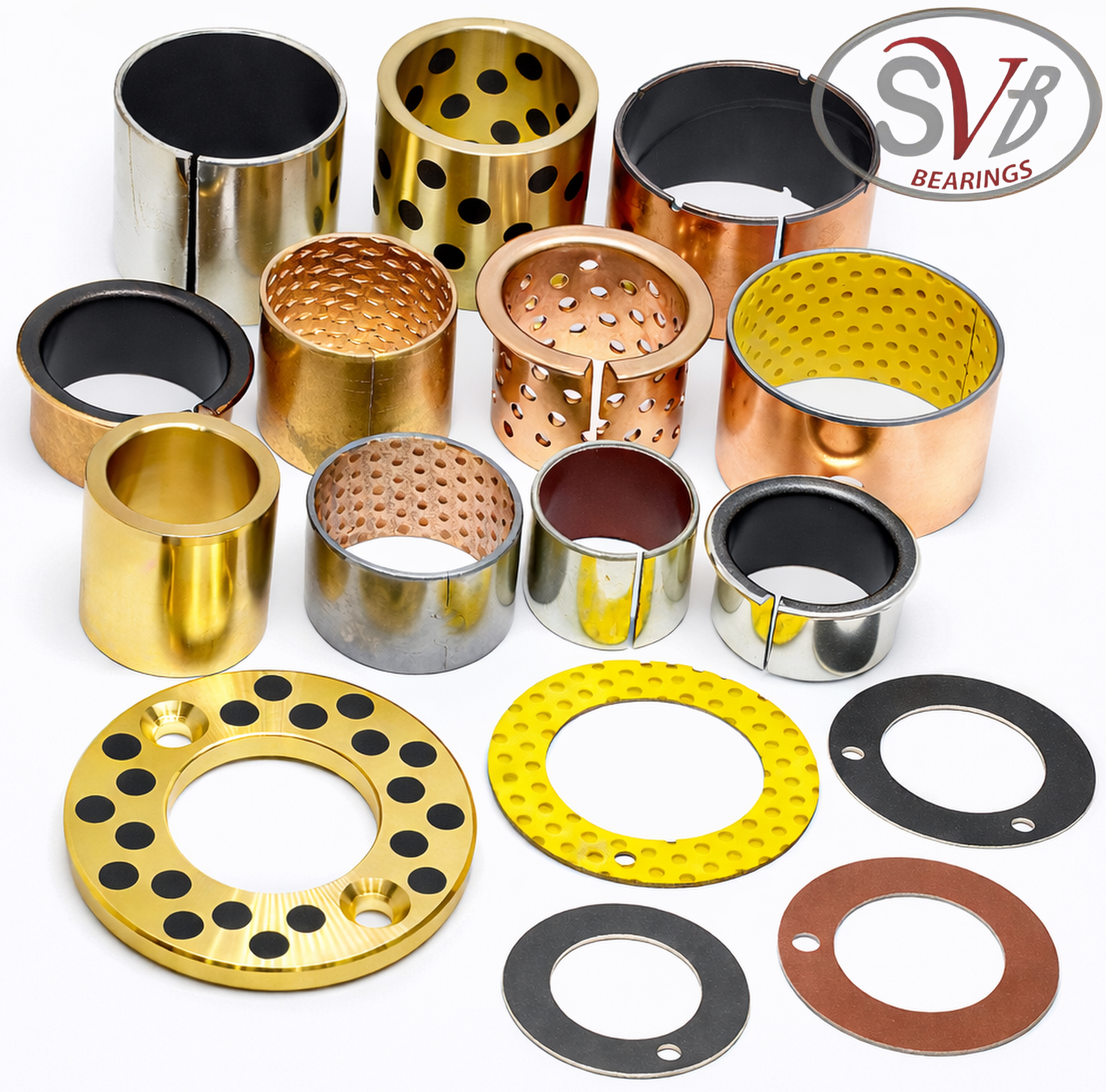
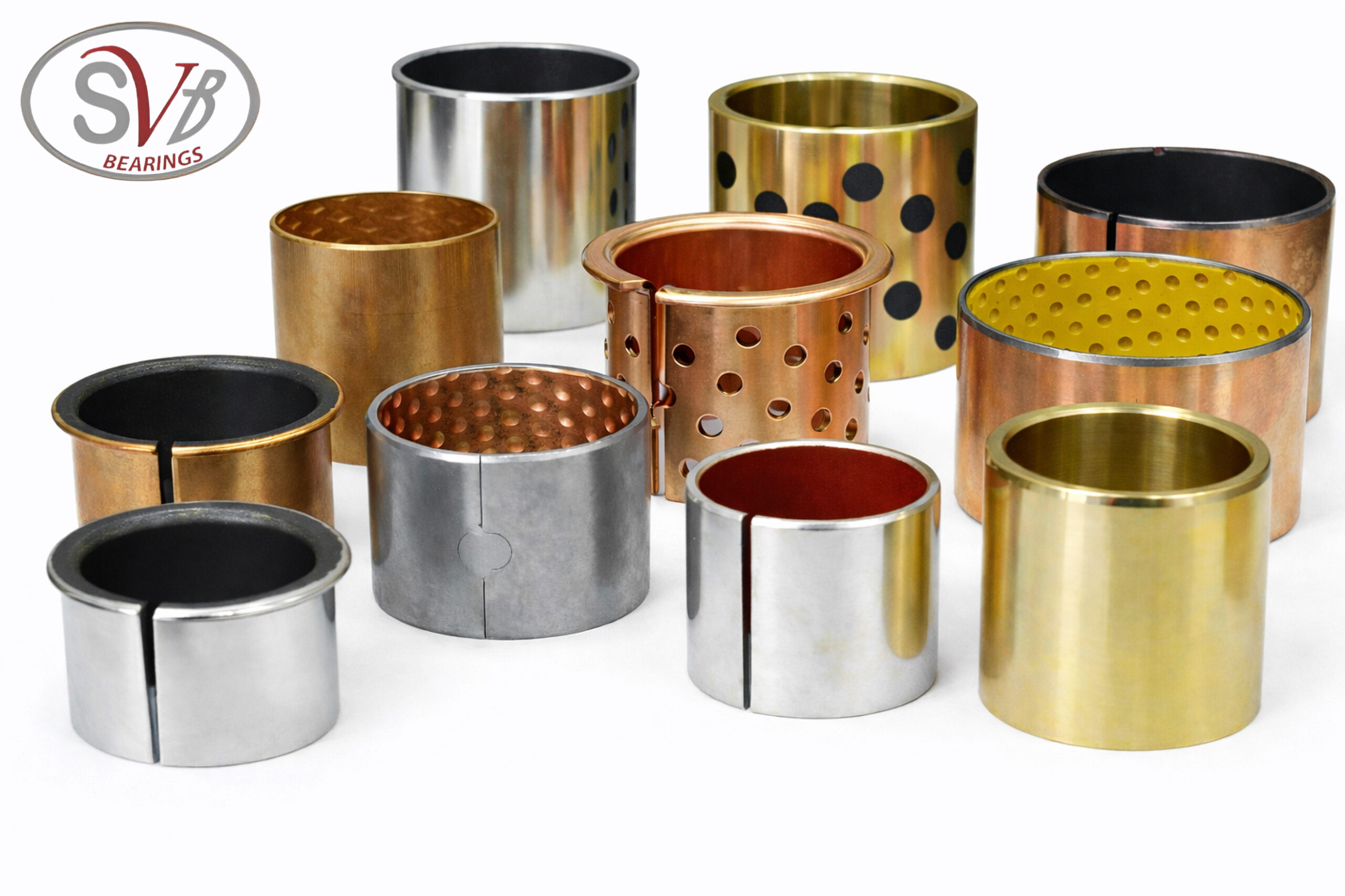
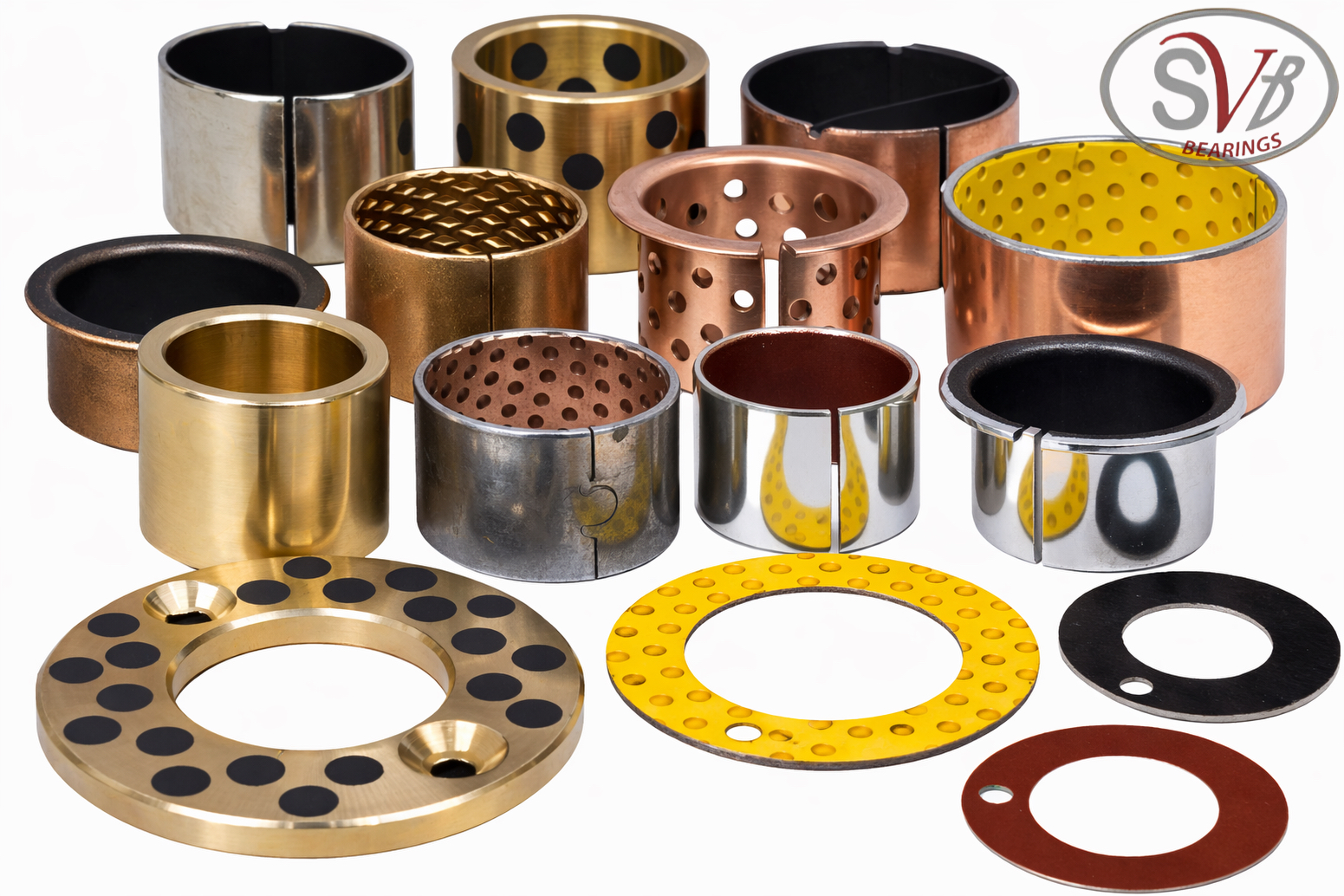
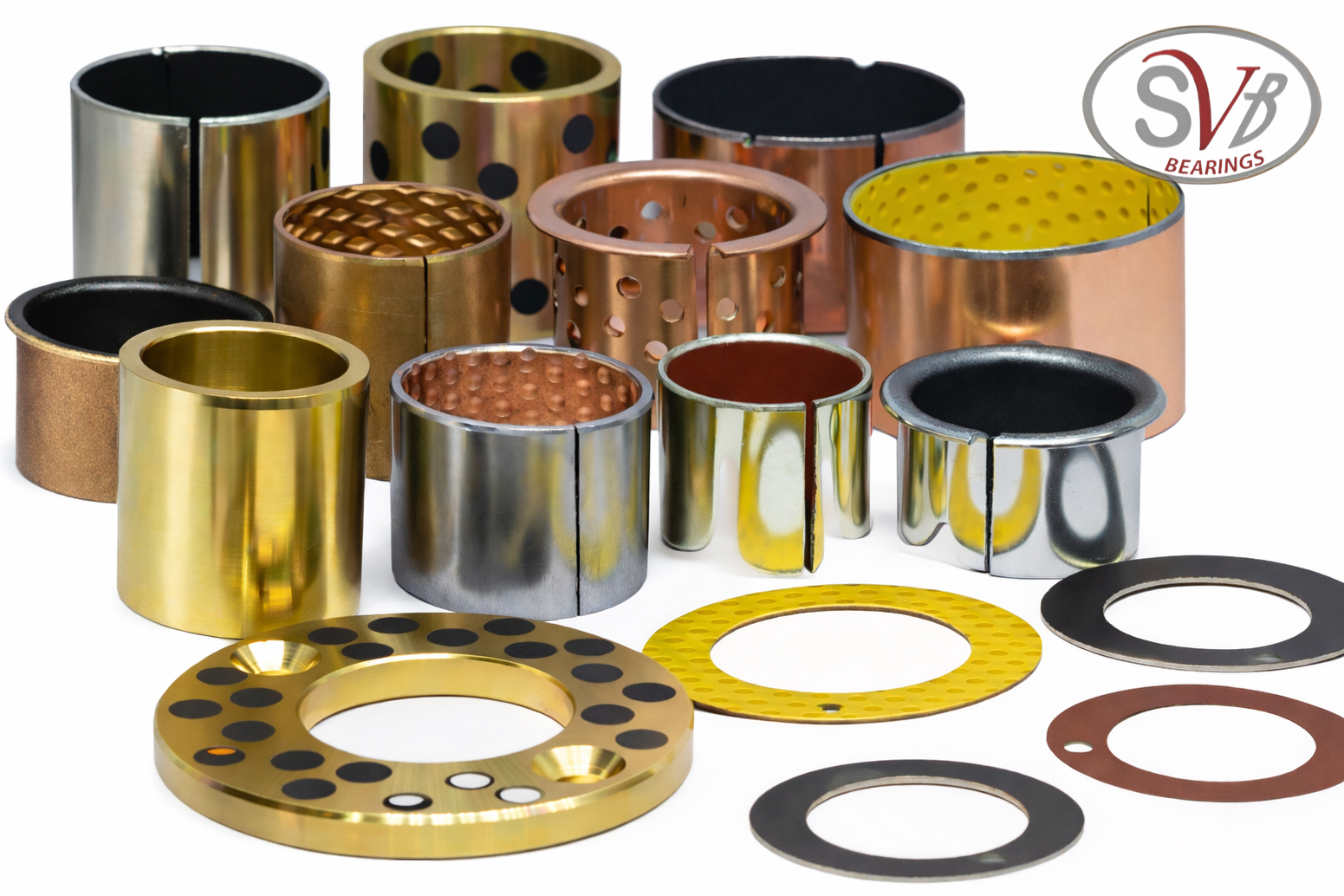
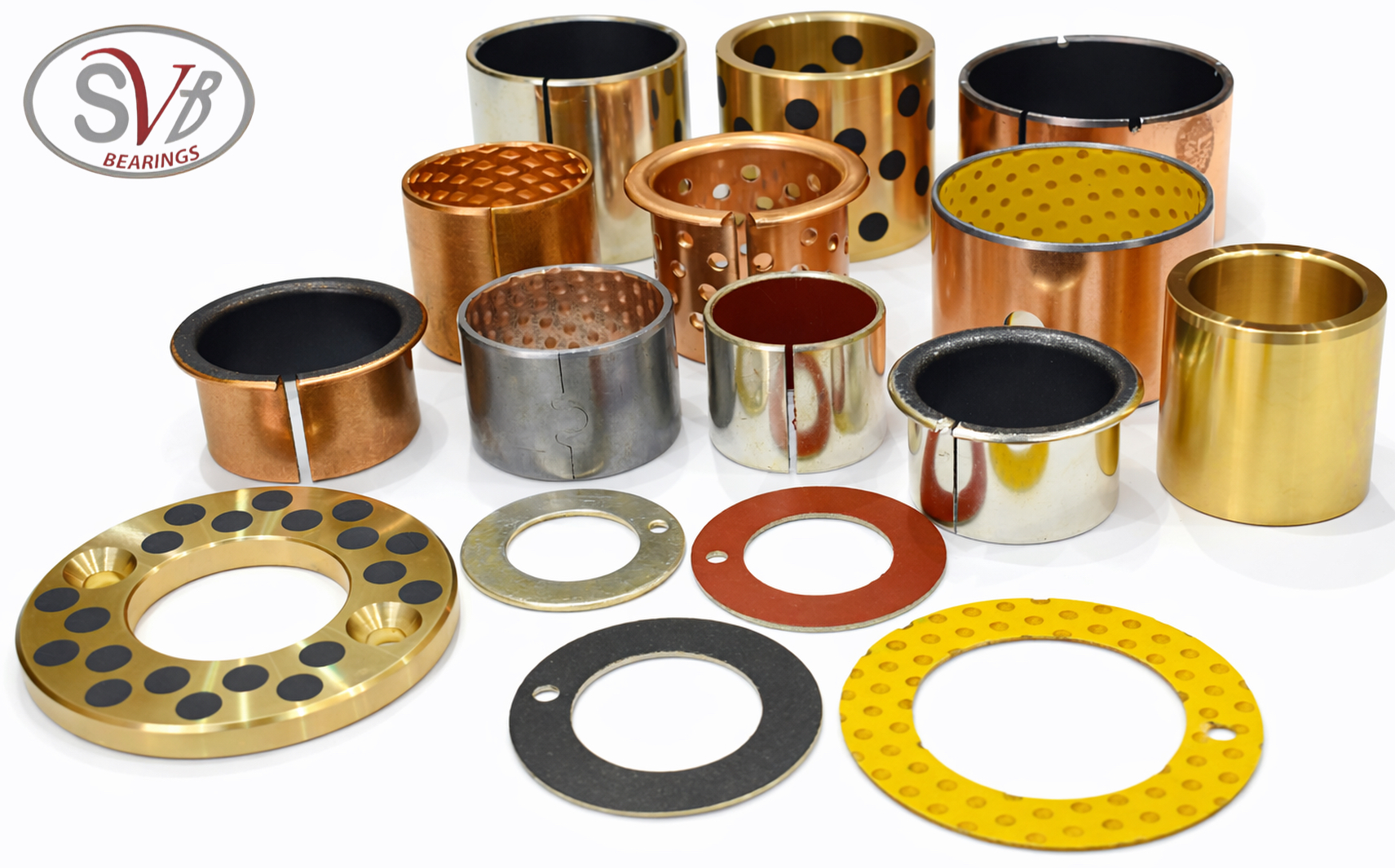
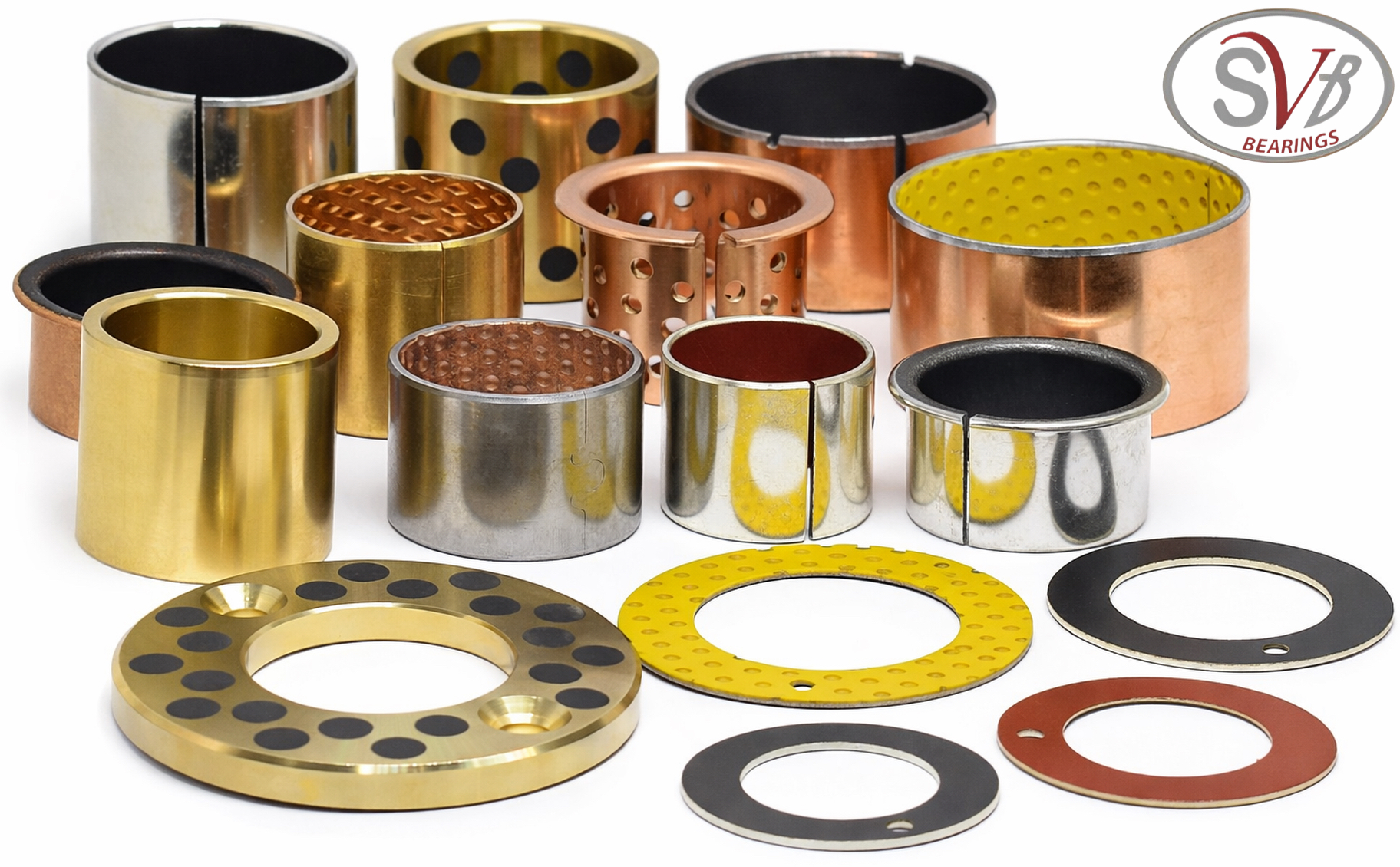
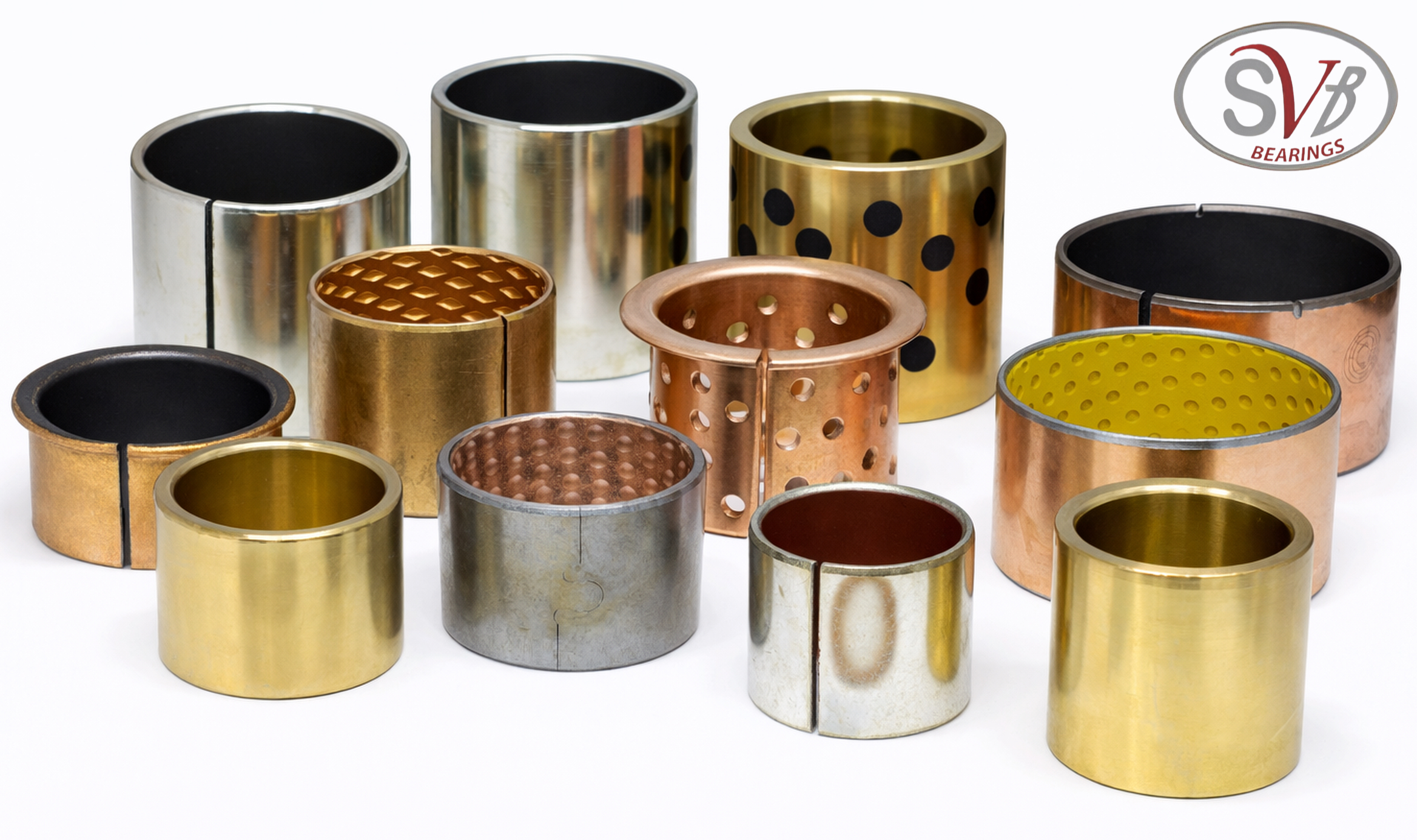
Self-Lubricating Bush
| Specification | |
|---|---|
| Material | As per Requirement |
| Inner Diameter | 3mm to 300mm |
| Outer Diameter | 3mm to 300mm |
| Length | 3mm to 300mm |
| Shape | Cylindrical |
| Lubrication | As per Requirement |
| Brand | SVB |
| Minimum Order Quantity | 1 |
| Delivery Time | Depends on Quantity |
Self-Lubricating Bush
Self-lubricating bushings are maintenance-free bearing components. They work without regular oil or grease. As a result, they reduce friction between moving surfaces. This means less wear, fewer service interruptions, and less lubrication-related contamination.
These bushings work well where routine lubrication is hard, costly, or impractical. They also support oscillating, reciprocating, and rotating motion, depending on the material and design. So, they suit a wide range of industrial settings.
How a Self-Lubricating Bush Works
A self-lubricating bush has a built-in lubricant source. It doesn’t rely on external oil or grease. This can be a solid lubricant inside the bush, a lubricant-filled porous material, or a low-friction polymer layer.
As the bush runs, this lubricant slowly releases at the contact surface. This cuts friction between the shaft and bush. Because lubrication happens from within, you don’t need to re-grease it. That’s why this design suits hard-to-reach or low-maintenance spots.
Materials We Use
We pick materials based on load, speed, temperature, and surroundings. Here are our common options:
- Bronze-PTFE composite: Good for low friction, high load, and general industrial use.
- Graphite-embedded bronze: Built for dry-running and high-heat jobs.
- Solid bronze with lubricant-filled channels: Strong for heavy-duty, slow-moving machines.
- Steel-backed composite: Adds strength while keeping friction low.
- Engineered polymer: Useful for corrosion resistance, light weight, or clean operation.
Don’t pick a material by load capacity alone. Shaft condition, alignment, temperature, speed, and exposure to dust or chemicals all affect service life too.
Key Features
- No routine oiling or greasing
- Lower friction and less wear
- Fewer planned maintenance stops
- Reliable performance in tight spots
- Lower risk of leaks or contamination
- Quiet at low and moderate speeds
- Strong load-bearing when specified correctly
Self-Lubricating Bush vs Graphite Filled Bronze Bush vs Oilless Bush
| Parameter | Self-Lubricating Bush | Graphite Filled Bronze Bush | Oilless Bush |
|---|---|---|---|
| Lubrication Source | Solid lubricant, PTFE, or filled matrix | Embedded graphite plugs | Solid film liner |
| Load Capacity | Medium to high | High | Medium |
| Temperature Range | Depends on material | Up to ~400°C | Up to ~280°C |
| Best For | Varied speeds and access limits | High load, high heat | Light-to-medium load, clean settings |
| Material Base | Bronze, composite, or polymer | Solid bronze | Composite or metal liner |
A conventional plain bushing often requires periodic oil or grease to control friction and wear. A self-lubricating bushing works differently. It contains a material system designed to provide lubrication during operation. This reduces, or even eliminates, the need for external lubricant.
As a result, it’s a practical choice for food processing equipment, textile machinery, outdoor systems, and other applications where lubrication access is limited, or contamination must be controlled.
One important note: understand the phrase “maintenance-free” in context. Although routine lubrication may not be needed, the bushing should still be inspected as part of normal equipment maintenance.
Applications
- Industrial and heavy machinery
- Automotive components
- Textile and packaging machines
- Construction equipment
- Agricultural machinery
- Pumps, motors, and general engineering systems
Why Choose Our Self-Lubricating Bush?
We build every bushing to set quality standards. We also check production at each stage. This keeps dimensions consistent and performance dependable.
Our team can help too. We review your application, assess conditions, and suggest the right material. We don’t push one option for every job — we match the bushing to your equipment.
FAQs
Q1. What is a self-lubricating bushing?
A self-lubricating bushing is a plain bearing made from a material that releases or transfers lubricant during operation. It’s designed to reduce friction and wear without needing regular external oil or grease.
Q2. How does a self-lubricating bush work?
It contains a built-in lubricant source — solid, impregnated, or a low-friction layer — that’s released or exposed during operation, so lubrication happens continuously without external re-greasing.
Q3. What materials are used to make one?
Common materials include bronze-backed PTFE, graphite-embedded bronze, and solid bronze with internal lubricant channels. The right choice depends on load, speed, and temperature requirements.
Q4. Where are these bushes used?
They’re used in industrial and heavy machinery, automotive components, textile and packaging equipment, construction and agricultural machinery, and pumps, motors, and general engineering systems — wherever routine lubrication access is difficult or impractical.
Q5. How is it different from a regular bushing?
A regular (oil-lubricated) bush needs periodic oiling and seals. This design, on the other hand, runs maintenance-free for its full service life.
Q6. Do you offer customized sizes?
Yes. Every unit we manufacture can be built to your exact dimensions and load requirements.
Q7. What is the load capacity?
Depending on the material, our bushes handle static loads up to 250 N/mm² and dynamic loads up to 140 N/mm².
| Technical Data | ||
|---|---|---|
| Performance Index | Data | |
| Max Load Capacity | Static load | 250 N/mm2 |
| Dynamic load | 140 N/mm2 | |
| Max Sliding Speed | Dry friction | 2.5 m/s |
| Oil lubrication | 5.0 m/s | |
| Max PV Value Limit | Dry friction | 3.6N/mm² · m/s |
| Oil lubrication | 50N/mm² · m/s | |
| Friction Coefficient | Dry friction | 0.08~0.20 |
| Oil lubrication | 0.02~0.07 | |
| Working Temperature | -195℃~+280℃ | |
| Thermal Conductivity | 70W/m · k | |
| Coefficient of Thermal Expansion | 17X10⁻⁶/K | |


