Welcome To SVB Bearings Private Limited
- info@svbbearings.com
- Call 07949356312

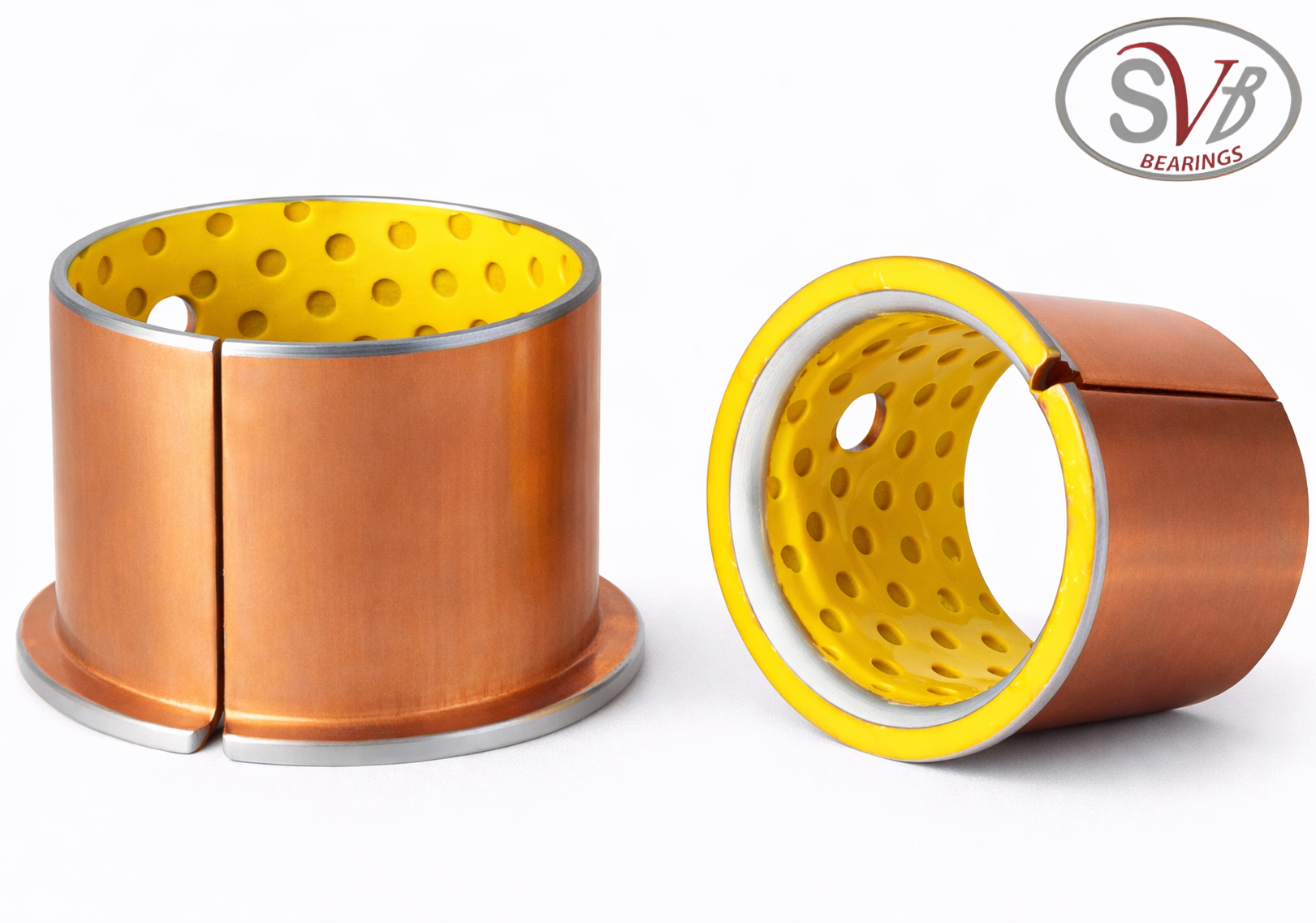
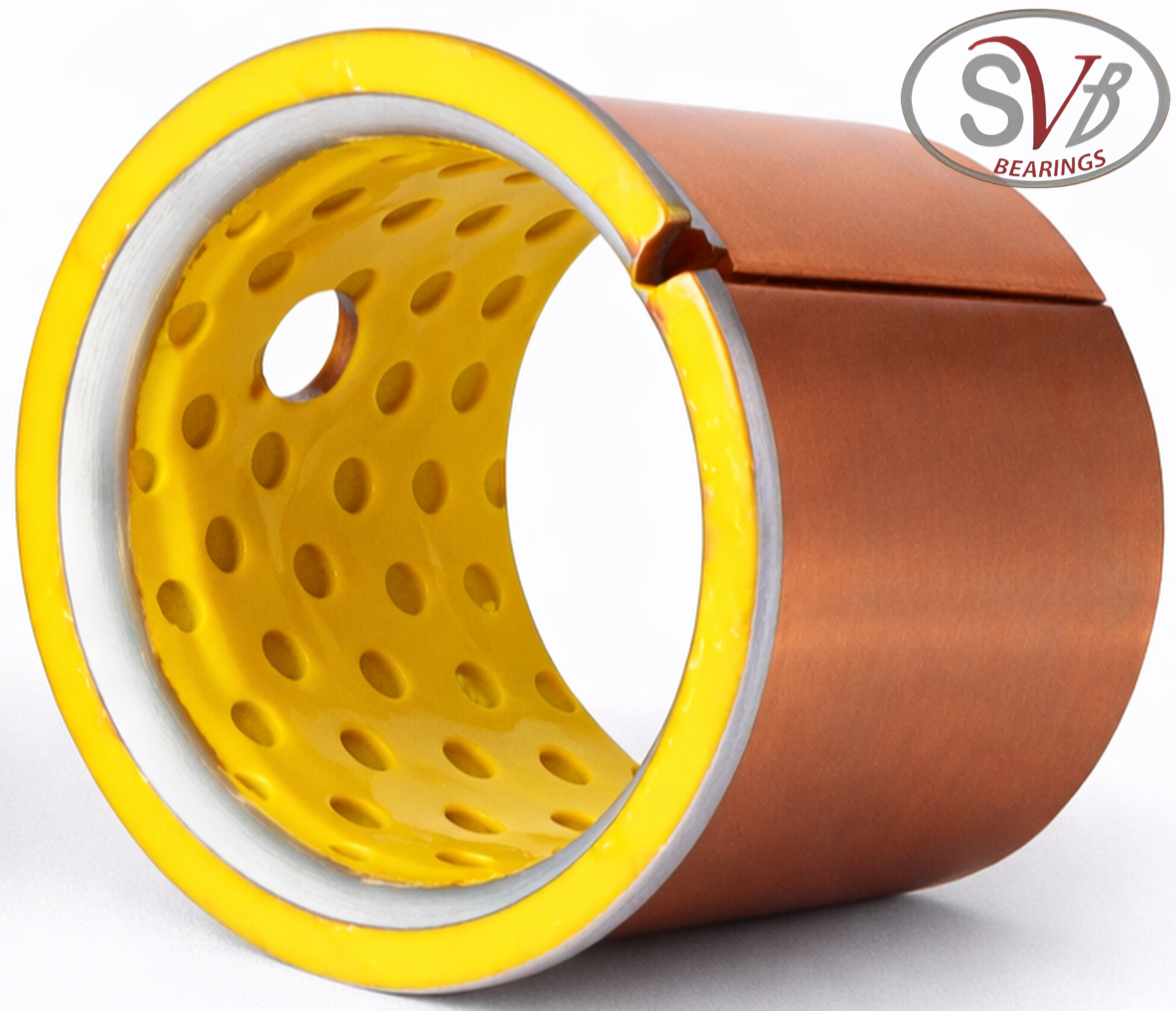
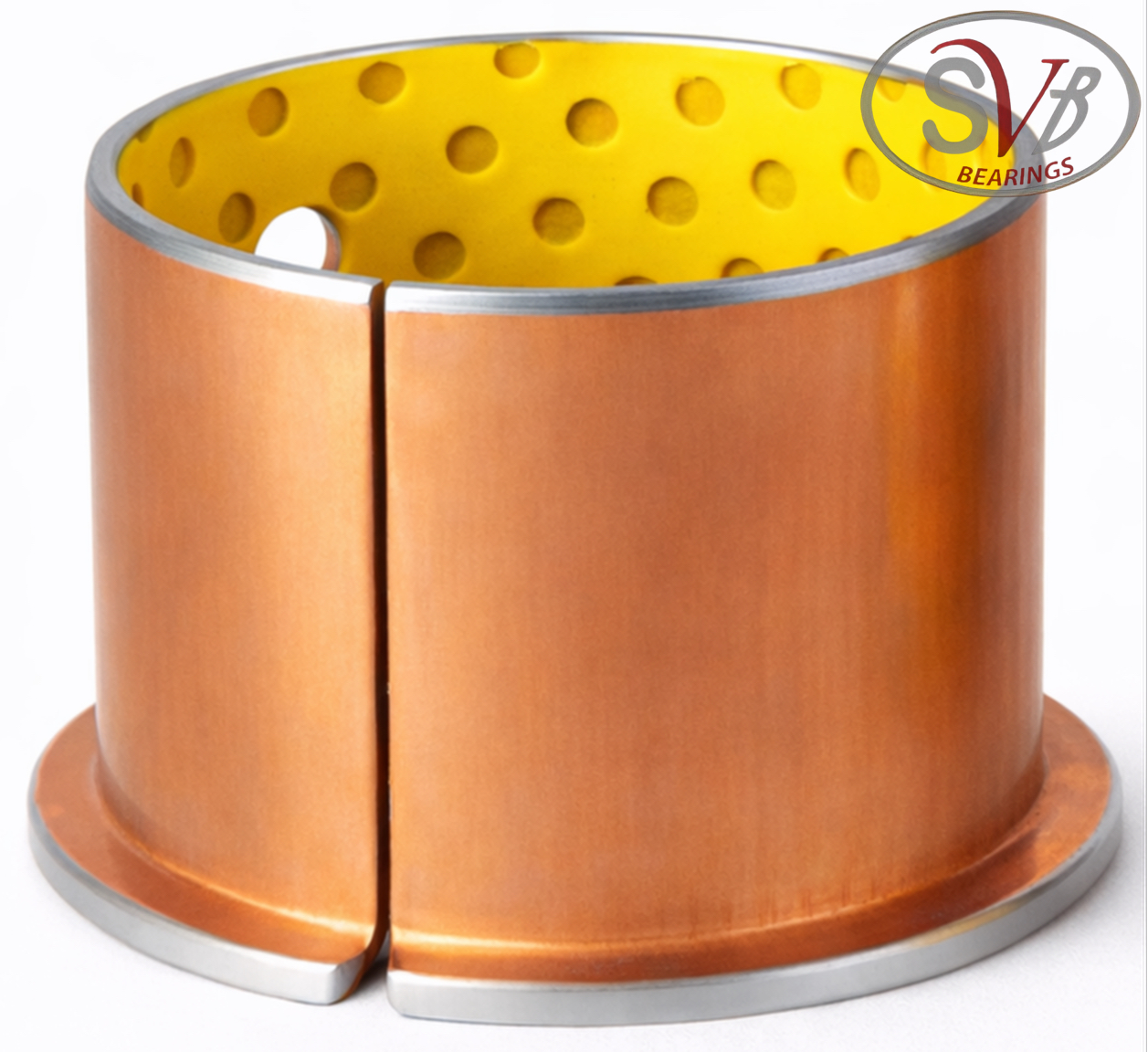
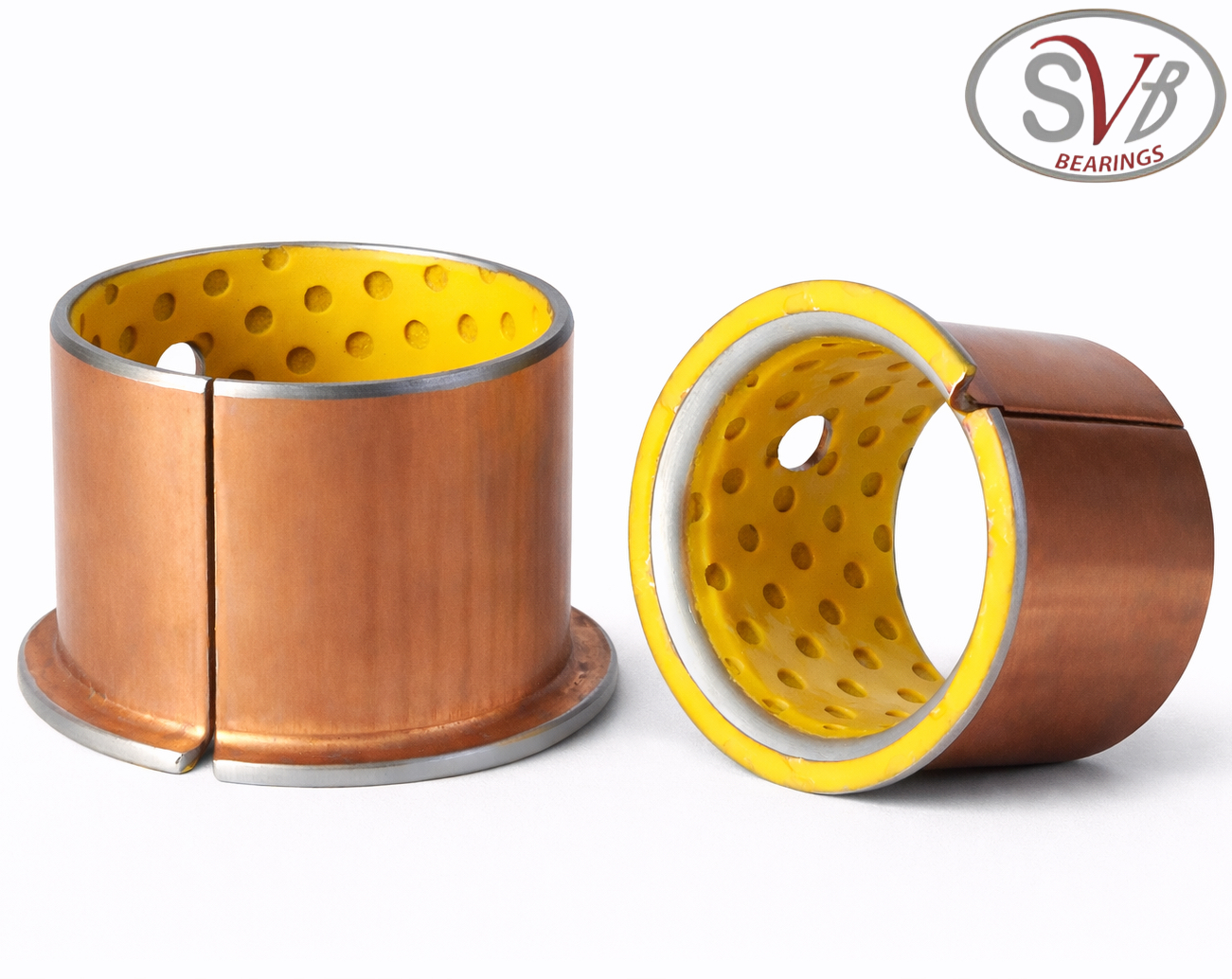
Flanged Self-Lubricating Bush with POM
| Specification | |
|---|---|
| Material | As per Requirement |
| Inner Diameter | 3mm to 300mm |
| Outer Diameter | 3mm to 300mm |
| Length | 3mm to 300mm |
| Shape | Cylindrical |
| Lubrication | As per Requirement |
| Brand | SVB |
| Minimum Order Quantity | 1 |
| Delivery Time | Depends on Quantity |
Flanged Self-Lubricating Bushes with POM
Flanged Self-Lubricating Bushes with POM deliver reliable performance in applications that need low friction and periodic lubrication. They combine a strong metal backing, a sintered bronze interlayer, and a POM (Polyoxymethylene) surface. As a result, they offer excellent wear resistance and long-lasting durability.
The POM surface features small lubrication pockets. These pockets retain grease and keep operation smooth, so friction stays low during movement. Meanwhile, the flanged design adds axial support and improves positioning. This means better load distribution, even in demanding industrial settings.
These bushes work well where lubrication is only available at start-up or occasionally after that. So they keep performing consistently and last longer in the field.
Key Features
- POM surface with lubrication pockets that reduce friction
- High wear resistance for a long service life
- Flanged design that improves alignment and axial support
- Strong metal backing that handles high loads
- Built for intermittent lubrication
- Excellent dimensional stability
- Available in standard and custom sizes
Applications
- Automotive components
- Industrial and heavy machinery
- Hydraulic and pneumatic systems
- Construction equipment
- Agricultural machinery
- Pumps, motors, and engineering assemblies
Why Choose Our Flanged Self-Lubricating Bushes with POM?
We engineer every bush to meet international quality standards. So you get smooth operation, reduced wear, and a longer service life in return. Plus, our strict quality control and customization options mean you get a reliable, cost-effective solution for almost any industrial application.
FAQs (Frequently Asked Questions)
Q1. What is a POM bush?
A POM bush is a bearing component with a Polyoxymethylene surface. It offers low friction and good wear resistance.
Q2. Do POM bushes require lubrication?
Yes. They’re designed for initial or periodic lubrication.
Q3. What is the advantage of flanged POM bushes?
The flange improves positioning, adds axial support, and helps distribute load evenly.
Q4. Do you offer customized sizes?
Yes. We manufacture bushes in various sizes and specifications to match your requirements.
| Technical Data | ||
|---|---|---|
| Performance Index | Data | |
| Max Load Capacity | Static load | 250 N/mm2 |
| Dynamic load | 140 N/mm2 | |
| Max Sliding Speed | Dry friction | 2.5 m/s |
| Oil lubrication | 5.0 m/s | |
| Max PV Value Limit | Dry friction | 2.8N/mm² · m/s |
| Oil lubrication | 50N/mm² · m/s | |
| Friction Coefficient | Dry friction | 0.05~0.18 |
| Oil lubrication | 0.02~0.10 | |
| Working Temperature | -40℃~+130℃ | |
| Thermal Conductivity | 52W/m · k | |
| Coefficient of Thermal Expansion | 18X10⁻⁶/K | |


